Decommissioning exposure review: coverage advice as low oil prices once again impact project economics

Energy

Decommissioning exposure review: coverage advice as low oil prices once again impact project economics

Max Oppenheim
Max Oppenheim 09 May 2025
Max Oppenheim
Max Oppenheim 09 May 2025
Decommissioning exposure review: coverage advice as low oil prices once again impact project economics

Previous slumps in the oil price in 2014, and during the 2020 onset of Covid-19, impacted project economics and saw periods of accelerated decommissioning activity as operator’s sought to cold stack aging assets to mitigate their losses. Prices are currently testing post-Covid lows, and risk managers may once again be faced with addressing decommissioning risk concerns sooner and on accelerated timescales.

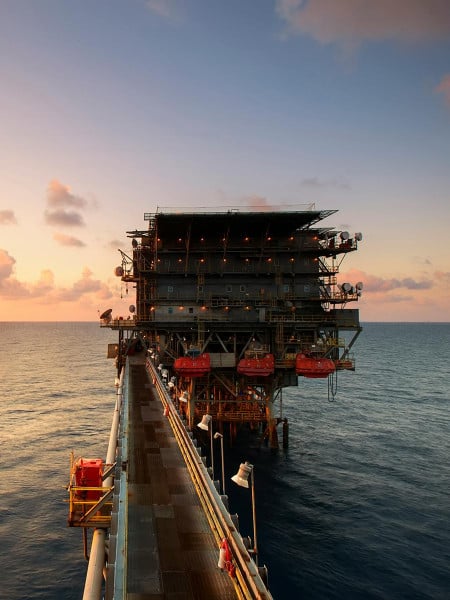
Decommissioning is a global challenge to the energy industry. The greatest obligations currently reside in the North Sea basin, followed by Brazil and the USA. In the North Sea, a total of 22 fields ceased production during 2024, and up to 40% of currently producing fields could cease production by 2030 based upon current investment plans, or sooner if investment cases falter based on a lower crude outlook. At the end of 2024, a backlog of 483 wells in the UK sector alone required plugging and abandonment activities, a number that could double to 2030. The UK challenge is particularly acute, with annual decommissioning spend set to average in excess of GBP2.4bn (USD3bn) in the mid-term outlook, compared to USD5.7bn p.a. for the USA over the same time frame.

Decommissioning exposures

A wide range of claims scenarios can arise from decommissioning and should be considered by operators:

  • A damage incident in late life that inflates overall first party removal costs.
  • Pollution liability and cleanup from wells during P&A activity/failed P&A.
  • Pollution liability and cleanup resulting from onshore dismantling.
  • Liability for damage to existing property occurring during dismantling activity.
  • Liability for bodily injuries.
  • First party impairment of scrap value following damage.
  • Retrieval of dropped objects from the seabed, both contractual and voluntary.
  • Marine venture exposures.

While claims arising from decommissioning activities are rare, there have been incidents over the years within each of the above categories and appropriate contractual risk allocation and insurance setup is key. 

Risk allocation

The first obligation upon risk managers will usually be to examine contractual arrangements relating to a decommissioning project, and to appropriately assign responsibilities for known exposures between contractors.

While there is no ‘standard’ for risk allocation for decommissioning activity, the boilerplate within LOGIC and BIMCO contracts points towards the operator retaining responsibility until the asset enters transit to shore. The removal contractor may frequently seek the operator, and instead retains both title and risk until transfer to the onshore disposal yard. 

A contractual review can help in the following ways:

  • Ensure assessment of risk transfer reflects industry standards.
  • Provide equitable allocation for difficult to insure and uninsurable risks.
  • Identify whether your existing policies comply with contractual requirements or need amendment.
  • Advise on appropriate schedule of required insurances.
  • Ensure safeguards such as around the quality of coverage and provision of evidence.

Priorities change throughout the asset lifecycle

As assets move through their life cycle their risk profile changes, and this creates challenges for risk managers:

  • During normal operations, prompt repair and reinstatement of property is paramount. Risk managers are focused on correct asset valuations and ensuring adequate limits and coverage for the property, with swift reinstatement.
  • As assets transition into later life, these initial concerns around reinstatement begin to fade, and in their place, liabilities become increasingly important. In particular, risk managers need to be aware of legal and contractual liabilities to remove wrecked property, and ensure the usual 25% of scheduled assets basis for ROW coverage remains sufficient.
  • In later life, evidencing responsibility for future decommissioning costs and managing their volatility is a key concern. Miller’s Surety team are well versed in arranging for decomissioning surety bonds as required.
  • Decommissioning is not a quick process. When platforms are winding down, many decom ‘minor works’ will be undertaken to prepare the platform for ‘cold stack’. Taken as a whole, a decommissioning project may have timescales of many years. Smoothly covering minor work scopes until removal is a key consideration.
  • As a platform ceases production, there will be P&A activities relating to wells. The usual home for such exposures is on the operator’s energy package. These wells should benefit from group OEE premiums in terms of economies of scale, and it is important these activities are recognised as lower risk than workovers, and priced accordingly.
  • As the final dismantling project is established, the contractual allocation of liabilities between parties during dismantling of equipment, DTEP, heavy lifts, and tow to scrap yards requires careful oversight. 

Business as usual - coverage within an operator’s package

  • In recent years, it has become increasingly popular to include decommissioning activity with the operator’s energy package. There are several advantages to this:
  • Utilisation of your existing capacity will often prove more economic than stand-alone placement(s).
  • The package can be used to clarify core cover for the main exposures such as dropped object ROW and pollution.
  • Inclusion in the package can lead to simpler administration of decommissioning coverage, which can be further leveraged by seeking automatic attachment of minor projects up to a threshold. 
Stand-alone Decommissioning All Risks (DAR) policy

Sometimes a stand-alone DAR can remain the best option:

  • Existing package insurers may not have appetite for decommissioning exposure, particularly if the project is complex and/or high value.  
  • If there are multiple joint venture interests, the placement of a single DAR can present a ‘one stop shop’ for the decom exposure, rather than declaring the risk to multiple operator packages.
  • While rare, decommissioning claims on the package policy could affect operational loss record and renewals.
  • Various marine venture exposures are often not explicitly covered a standard operational package i.e. stand by charges, vessel cancellation costs, forwarding charges, towage risks.
  • DAR can offer specialist cover, such as increased costs of project completion, which may be difficult to arrange via extension to package. 

Miller is here to help

We understand the risks presented by decommissioning obligations, and we can help you navigate them.

We can advise on appropriate contractual risk allocation, and whether to include required coverage in your energy package, or seek standalone DAR coverage. We will source competitive options for risk transfer as required.

Get in touch with us today and find out more about how Miller can help you. 

Get in touch

Max Oppenheim HR

Max Oppenheim

Director - Client Advocate +44 (0) 20 7031 2894 [email protected] Read more
James Bradley

James Bradley

Senior Director - Joint Head of Energy Liability +44 (0) 20 7031 2585 [email protected] Read more