Managing political risk in a multipolar world
Terrorism & Political Violence

Managing political risk in a multipolar world

James Floyd
James Floyd 27 March 2025
James Floyd
James Floyd 27 March 2025
Managing political risk in a multipolar world

The USA is embarking on a more isolationist course than the world has become used to in recent decades.

Elected on the renewed promise to put ‘America First’, the current administration has made significant changes to US foreign policy. These changes include the imposition of meaningful trade tariffs, a less firm security umbrella to Europe, and cuts to foreign aid spending. The international rules-based order, and status of the US dollar as the world’s reserve currency remain intact, but clients need to navigate a more uncertain geopolitical landscape.

The risks are particularly significant if clients wish to operate at the margins of ever-firming trade blocs, and in territories where governments are potentially open to shifting allegiances. As we return to an environment where global ‘spheres of influence’ are being strongly contested, our clients are turning to Miller for advice and products that allow them to continue with their international growth strategies.

Increasing exposure that is both physical and legal

The insurance market characteristically divides political exposures along damage and non-damage lines. Losses that have a physical damage trigger are catered for by the Political Violence (PV) market, and non-physical losses are handled within the Political Risks (PR) market. We are seeing increasing requests from our clients to explore both products.


Political Violence

Losses as a result of political violence have surged since the pivotal second invasion of Ukraine by Russia in 2022. Very material regional losses have been directly caused by the war, but we have also seen losses due to increased incidents of sabotage, as witnessed with damage to the Nordstream pipeline and subsea communication cables in the Baltic.

The threat of war and sabotage is on the rise globally. The global ‘peace dividend’ is faltering, with governments re-arming across Europe in response to increased threat levels. In Asia, China continues to increase its defence spending as it looks to exert more control within the Pacific region and beyond.

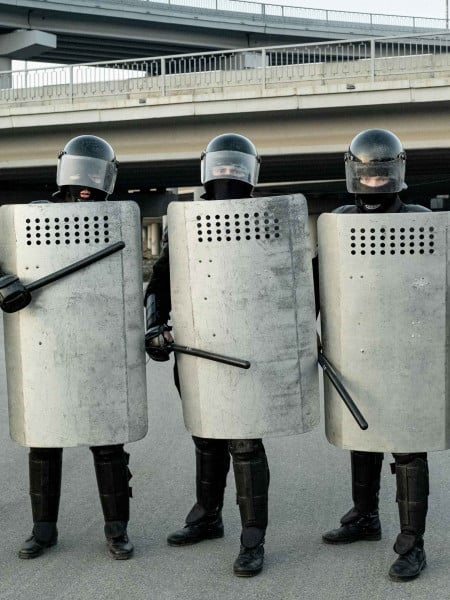
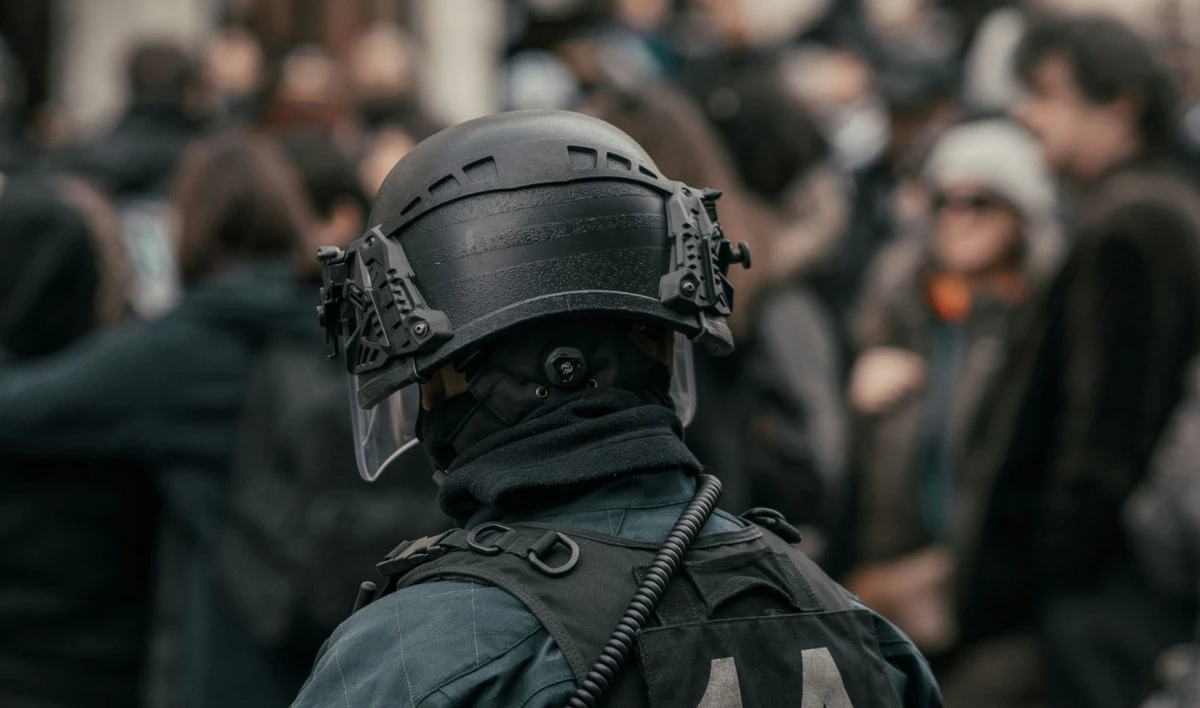
However, political violence losses are not confined to direct actions between nation states. We are more commonly seeing damage to property caused by domestic civil unrest. The economic disruption of COVID-19 has led to widespread dissatisfaction and protests against ruling governments, and such, civil disruption can be further stoked by global powers seeking to control political regimes within their spheres of influence.

Increased losses from Strikes, Riots, and Civil Commotion (SRCC) have resulted from heightened tensions. Coverage positions within the property damage market have evolved in response. Historically, coverage for SRCC may have been included by virtue of property policies being ‘all risks’ and silent on SRCC or, actively written back by property insurers willing to offer the cover. Despite softer trading conditions for property risks, underwriters are reviewing coverage positions. Market bodies such as the LMA have issued several new clauses in the past year providing exclusionary language for insurers that are seeking push SRCC risk towards the specialist PV market.

We are seeing a shift from clients buying terrorism coverage only, to broader PV coverage, often including SRCC. It can be difficult to categorise between different types of PV claims, and there can often be blurred lines between what is categorised as loss pertaining to war, civil war, sabotage, SRCC, or terrorism (amongst other perils).

Loss categorisation may often depend on understanding the motive for damage, and this motivation can be both difficult to understand, and to prove. A particular difficulty arises in distinguishing between SRCC and terrorism losses, particularly if a government wishes to label violent protest and damage as ‘terrorist acts’.

As a result of these uncertainties, and in response to heightened risks, we are frequently seeing narrower terrorism policies expanded into full spectrum PV purchases, at increased cost, but in return for less room for dispute, and increased certainty of claim recovery. While PV rates have increased, the coverage remains a viable and cost-effective means of dealing with the physical exposures our clients face.

Political Risks

While some form of PV protection has long been a staple purchase for many clients, non-damage PR coverage has historically been more of a niche purchase. Here too, both perceptions and needs are changing.

As spheres of influence are contested, we are seeing coup d’etat on the rise, particularly in Africa, which is an area where Western and Chinese interests are competing strongly. There have been nine coups in Africa over the last five years, alongside a similar number of unsuccessful coups.

From a non-damage perspective, a coup d’etat poses a significant risk. The legal enforceability of property rights and commercial contracts are essential pre-requisites for investors. In most cases, a newly formed government will be incentivised to continue with existing commercial arrangements, but there is always a risk of revocation of contracts if a new government changes their geopolitical alignment, possibly favouring trading relationships with other countries. 

International companies that previously enjoyed good relationships with the outgoing administration may be viewed with suspicion following a change of regime. The ability of international companies to lean upon soft power to maintain their interests through supportive international bodies is being eroded within areas of contested influence. Where governments remain intact, pressure from outside interests may still see contracts revoked and awarded to others.

The PR product has multiple heads of coverage to protect clients including - confiscation, expropriation, nationalisation and deprivation, sanctions, arbitration award default, forced abandonment, license cancellation, and forced divestiture. It is also possible to buy combined products that offer PR and PV coverage side by side within a single policy.

HOW WE CAN HELP

When political exposures increase, investors are faced with three options:

  • to continue to run the risks, and rely upon commercial leverage to manage exposures;
  • to pull back and exit international investments;
  • or, utilise insurance products to mitigate the financial consequences of suffering a loss.

The Miller team can enable your international strategy by mitigating country/government risk for entities transacting in less stable regions.

  • Our products can diversify counterparties and support internal credit risk management procedures.
  • We can arrange indemnify for physical losses as a result of political violence.
  • We can support business expansion and mitigate country risk for investors and lenders.

GET IN TOUCH

James Floyd W

James Floyd

Senior Director - Head of Terrorism & Political Violence +44 (0) 20 7031 2406 [email protected] Read more

Arnaud Froideval

Arnaud Froideval

Executive Director - Head of CSP Europe and Switzerland +41 (0) 76 497 2232 [email protected] Read more
Ben Gibbons

Ben Gibbons

Executive Director - Global Head of Credit, Surety & Political Risks +44 (0) 20 7031 2788 [email protected] Read more